Association Between Vitamin D3 Deficiency and Postpartum Outcomes in Pregnant Women
A Systematic Literature Review and Meta Analysis
DOI:
https://doi.org/10.5281/zenodo.15777930Abstract
 Abstract Views: 273
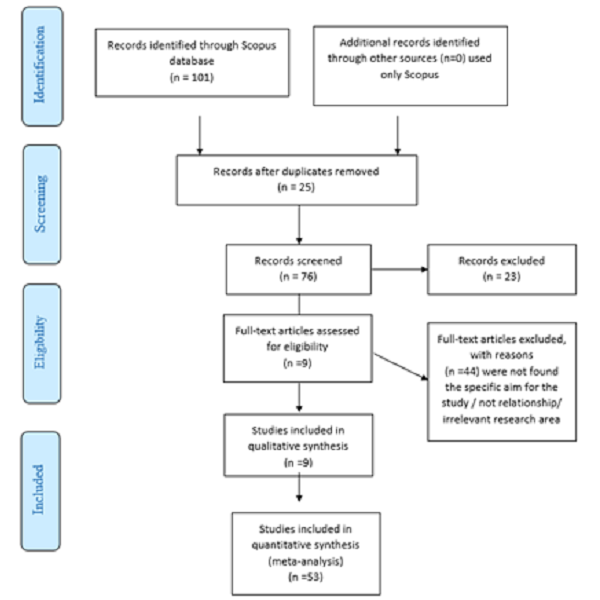
Women may experience postpartum depression, anxiety, and other mood disorders after giving birth. Vitamin D3 can be formed in the human body through skin exposure to sunlight (UV radiation) or from dietary resources. This study aims to evaluate the correlation between postpartum depression and vitamin D3 deficiency in pregnant women using "preferred reporting. Item for systemic review and meta-analysis (PRISMA) framework as a guide, this study incorporated insight from 9 scholarly papers to illuminate the impact of vitamin D3 on pregnant women that is related to postpartum, which can lead to psychological issues like anxiety and depression. In conclusion, a pregnant woman experiencing low levels of vitamin D3 thought that the first and second trimesters of her pregnancy might have an impact on her psychological behavior after giving birth because she did not eat a diet high in vitamin D3 and was not exposed to sunlight. In addition, this study revealed that pregnant women have severely low vitamin D3 levels. Therefore, every pregnant woman should be monitored and followed up with her vitamin D3 serum levels throughout the period of gestation and take vitamin D3 supplements when it is found at a low level and should also visit a psychiatrist when one of these symptoms appears.
Keywords:
Postpartum, Pregnant women, Systematic literature review, Vitamin d3References
Agüero-Domenech, N., Bernabeu, E., García-Valentín, A., Sarrión, A., Jover, S., Baranda, J., ... & García-Teruel, M. J. (2023). Influence of strict lockdown on vitamin D deficiency in pregnant women: a word of caution. Nutrients, 15(8), 1972. https://doi.org/10.3390/nu15081972
Al-Faris, N. A. (2016). High prevalence of vitamin D deficiency among pregnant Saudi women. Nutrients, 8(2), 77. https://doi.org/10.3390/nu8020077
Axelsson, D., Brynhildsen, J., & Blomberg, M. (2019). Vitamin D deficiency at the time of delivery–prevalence and risk of postpartum infections. Plos one, 14(12), e0226673. https://doi.org/10.1371/journal.pone.0226673
Bozorov, A. G., Ikhtiyarova, G. A., & Davlatov, S. S. (2020). Biochemical Markers for Prediction of Premature Labor in Urogenital Infections. International Journal of Pharmaceutical Research (09752366), 12(3). https://doi.org/10.31838/ijpr/2021.13.01.674
Chau, V., Dryer, R., & Brunton, R. (2023). Examining the relationship between maternal childhood abuse history and mother-infant bonding: The mediating roles of postpartum depression and maternal self-efficacy. Child Abuse & Neglect, 145, 106439. https://doi.org/10.1016/j.chiabu.2023.106439
Christoph, P., Challande, P., Raio, L., & Surbek, D. (2020). High prevalence of severe vitamin D deficiency during the first trimester in pregnant women in Switzerland and its potential contributions to adverse outcomes in the pregnancy. Swiss Medical Weekly, 150, w20238. http://dx.doi.org/10.48350/150132
Flood-Nichols, S. K., Tinnemore, D., Huang, R. R., Napolitano, P. G., & Ippolito, D. L. (2015). Vitamin D deficiency in early pregnancy. PLoS One, 10(4), e0123763. https://doi.org/10.1371/journal.pone.0123763
Jan Mohamed, H. J., Rowan, A., Fong, B., & Loy, S. L. (2014). Maternal serum and breast milk vitamin D levels: findings from the Universiti Sains Malaysia Pregnancy Cohort Study. PloS one, 9(7), e100705. https://doi.org/10.1371/journal.pone.0100705
Lundqvist, A., Sandström, H., Stenlund, H., Johansson, I., & Hultdin, J. (2016). Vitamin D status during pregnancy: a longitudinal study in Swedish women from early pregnancy to seven months postpartum. PloS one, 11(3), e0150385. https://doi.org/10.1371/journal.pone.0150385
Meija, L., Piskurjova, A., Nikolajeva, K., Aizbalte, O., Rezgale, R., Lejnieks, A., & Cauce, V. (2023). Vitamin D intake and serum levels in pregnant and postpartum women. Nutrients, 15(15), 3493. https://doi.org/10.3390/nu15153493
Moher, D., Liberati, A., Tetzlaff, J., & Altman, D. G. (2009). Preferred reporting items for systematic reviews and meta-analyses: the PRISMA statement. Bmj, 339. https://doi.org/10.1136/bmj.b2535
Noshiro, K., Umazume, T., Inubashiri, M., Tamura, M., Hosaka, M., & Watari, H. (2023). Association between Edinburgh postnatal depression scale and serum levels of ketone bodies and vitamin D, thyroid function, and iron metabolism. Nutrients, 15(3), 768. https://doi.org/10.3390/nu15030768
Palacios, J., Adroher, S., Brodzinsky, D. M., Grotevant, H. D., Johnson, D. E., Juffer, F., ... & Tarren-Sweeney, M. (2019). Adoption in the service of child protection: An international interdisciplinary perspective. Psychology, Public Policy, and Law, 25(2), 57.
Pereira-Santos, M., Carvalho, G. Q., Couto, R. D., Dos Santos, D. B., & Oliveira, A. M. (2018). Vitamin D deficiency and associated factors among pregnant women of a sunny city in Northeast of Brazil. Clinical nutrition ESPEN, 23, 240-244. https://doi.org/10.1016/j.clnesp.2017.09.007
Pérez-Castillo, Í. M., Rivero-Blanco, T., León-Ríos, X. A., Expósito-Ruiz, M., López-Criado, M. S., & Aguilar-Cordero, M. J. (2020). Associations of vitamin D deficiency, parathyroid hormone, calcium, and phosphorus with perinatal adverse outcomes. A prospective cohort study. Nutrients, 12(11), 3279. https://doi.org/10.3390/nu12113279
Ribamar, A., Almeida, B., Soares, A., Peniche, B., Jesus, P., Cruz, S. P. D., & Ramalho, A. (2020). Relationship between vitamin D deficiency and both gestational and postpartum depression. Nutr Hosp, 37(6), 1238-1245.
Saharoy, R., Potdukhe, A., Wanjari, M., & Taksande, A. B. (2023). Postpartum depression and maternal care: exploring the complex effects on mothers and infants. Cureus, 15(7), e41381. https://doi.org/10.7759/cureus.41381
Schoos, A. M. M., Vinther, C., Nørgaard, S., Brustad, N., Stokholm, J., Bønnelykke, K., ... & Chawes, B. L. (2019). Environmental and genetic determinants of serum 25 (OH)-vitamin D levels during pregnancy and early childhood. Children, 6(10), 116. https://doi.org/10.3390/children6100116
Silverman, M. E., Reichenberg, A., Savitz, D. A., Cnattingius, S., Lichtenstein, P., Hultman, C. M., ... & Sandin, S. (2017). The risk factors for postpartum depression: A population‐based study. Depression and Anxiety, 34(2), 178-187. https://doi.org/10.1002/da.22597
Vandevijvere, S., Amsalkhir, S., Oyen, H. V., & Moreno Reyes, M. R. (2012). High prevalence of vitamin D deficiency in pregnant women: a national cross-sectional survey. PloS one, 7(8), e43868. https://doi.org/10.1371/journal.pone.0043868
Vestergaard, A. L., Christensen, M., Andreasen, M. F., Larsen, A., & Bor, P. (2023). Vitamin D in pregnancy (GRAVITD)–a randomised controlled trial identifying associations and mechanisms linking maternal Vitamin D deficiency to placental dysfunction and adverse pregnancy outcomes–study protocol. BMC Pregnancy and Childbirth, 23(1), 177. https://doi.org/10.1186/s12884-023-05484-x
Williams, J. A., Romero, V. C., Clinton, C. M., Vazquez, D. M., Marcus, S. M., Chilimigras, J. L., ... & Mozurkewich, E. L. (2016). Vitamin D levels and perinatal depressive symptoms in women at risk: a secondary analysis of the mothers, omega-3, and mental health study. BMC Pregnancy and Childbirth, 16, 1-9. https://doi.org/10.1186/s12884-016-0988-7

Downloads
Published
How to Cite
Issue
Section
License
Copyright (c) 2025 Biomedicine and Chemical Sciences

This work is licensed under a Creative Commons Attribution 4.0 International License.