Total Phenolic and Flavonoid Compound of Crude and Purified Extract of Green Tea Leaves (Camellia sinensis)
DOI:
https://doi.org/10.5281/zenodo.15773789Abstract
 Abstract Views: 401
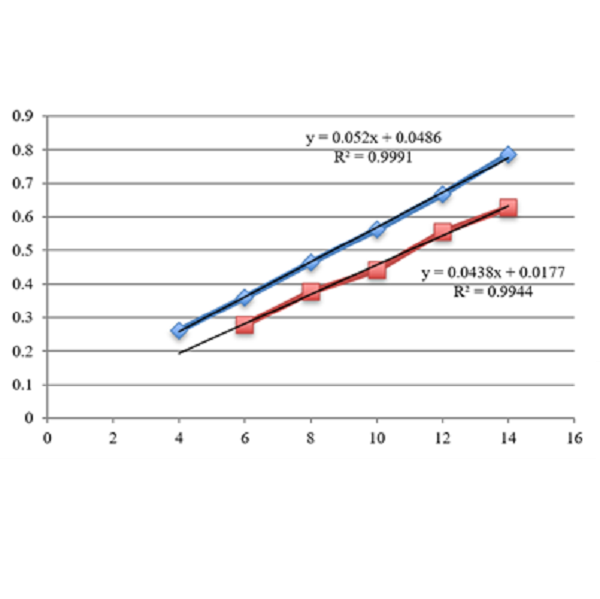
Polyphenols are a class of chemical compounds most commonly found in plants, these compounds have many health benefits associated with its character. The antioxidant activity of natural materials related to the polyphenol content, which can counteract free radicals. This study aims to determine the levels of total phenolic and flavonoid in crude and purified extracts of the green tea leaves (Camellia sinensis). Determination of total phenolic content was used standard gallic acid by the Folin-Ciocalteau method. Total flavonoid assay using standard reference of quercetin by Chang method. Instrument used to measure the absorbance of the reaction is a UV-Visible spectrophotometer. The results obtained after the measurement indicates that the sample of crude extract and purified extract of tea leaves containing total phenolic levels 40.5 and 43.9 mgGAE/g, respectively, while the levels of total flavonoids contained respectively by 2.77 and 3.14 mgQE/g. From the results obtained it can be concluded that the green tea leaves have a total phenolic content is greater than the total flavonoid content, thus it has great potential as an antioxidant.
Keywords:
Camellia sinensis, Crude and purified extract, Flavonoid compound, Green tea leaves, Total phenolicReferences
Abdi, R. (2010). Flavonoid: Structure, Antioxidant Properties and Roles in Biological Systems. Belian Journals, 9(2), 196-202.
Adedapo, A. A., Jimoh, F. O., Koduru, S., Masika, P. J., & Afolayan, A. J. (2009). Assessment of the medicinal potentials of the methanol extracts of the leaves and stems of Buddleja saligna. BMC Complementary and Alternative Medicine, 9, 1-8. https://doi.org/10.1186/1472-6882-9-21
Chang, C. C., Yang, M. H., Wen, H. M., & Chern, J. C. (2002). Estimation of total flavonoid content in propolis by two complementary colorimetric methods. Journal of Food and Drug Analysis, 10(3), 178-182. https://doi.org/10.38212/2224-6614.2748
Chaturvedula, V. S. P., & Prakash, I. (2011). The aroma, taste, color and bioactive constituents of tea. Journal of Medicinal Plants Research, 5(11), 2110-2124.
Dogara, A. M., Hama, H. A., Mahmud, A. A., Halliru, B. S., Labaran, I., & Danlami, H. (2025). Fragrant Nutmeg (Myristica fragrans Houtt. Myristicaceae). In Comprehensive Guide to Hallucinogenic Plants (pp. 259-271). CRC Press.
Ebrahimzadeh, M. A., Nabavi, S. F., & Nabavi, S. M. (2009). Antioxidant activities of methanol extract of Sambucus ebulus L. flower. Pakistan Journal of Biological Sciences: PJBS, 12(5), 447-450. https://doi.org/10.3923/pjbs.2009.447.450
Fawwaz, M., Muliadi, D. S., & Muflihunna, A. (2017). Kedelai Hitam (Glycine soja) terhidrolisis sebagai sumber flavonoid total. Jurnal Fitofarmaka Indonesia, 4(1), 194-198. https://doi.org/10.33096/jffi.v4i1.227
Fawwaz, M., Wahyudin, E., & Djide, M. N. (2014). The effects of isoflavone soybean (Glycine max (L) merill) fermentation results by Lactobacillus bulgaricus towards in vitro osteoblast cell proliferation. International Journal of PharmTech Research, 6(2), 666-670.
Heim, K. E., Tagliaferro, A. R., & Bobilya, D. J. (2002). Flavonoid antioxidants: Chemistry, metabolism and structure-activity relationships. The Journal of Nutritional Biochemistry, 13(10), 572-584. https://doi.org/10.1016/S0955-2863(02)00208-5
Izzreen, N. M. Q., & Fadzelly, M. A. (2013). Phytochemicals and antioxidant properties of different parts of Camellia sinensis leaves from Sabah Tea Plantation in Sabah, Malaysia. International Food Research Journal, 20(1), 307.
Khan, N., & Mukhtar, H. (2018). Tea polyphenols in promotion of human health. Nutrients, 11(1), 39. https://doi.org/10.3390/nu11010039
Končić, M. Z., Kremer, D., Gruz, J., Strnad, M., Biševac, G., Kosalec, I., ... & Karlović, K. (2010). Antioxidant and antimicrobial properties of Moltkia petraea (Tratt.) Griseb. flower, leaf and stem infusions. Food and Chemical Toxicology, 48(6), 1537-1542. https://doi.org/10.1016/j.fct.2010.03.021
Kopjar, M., Tadić, M., & Piližota, V. (2015). Phenol content and antioxidant activity of green, yellow and black tea leaves. Chemical and Biological Technologies in Agriculture, 2, 1-6. https://doi.org/10.1186/s40538-014-0028-7
McDonald, S., Prenzler, P. D., Antolovich, M., & Robards, K. (2001). Phenolic content and antioxidant activity of olive extracts. Food Chemistry, 73(1), 73-84. https://doi.org/10.1016/S0308-8146(00)00288-0
Nabavi, S. M., Ebrahimzadeh, M. A., Nabavi, S. F., Hamidinia, A., & Bekhradnia, A. R. (2008). Determination of antioxidant activity, phenol and flavonoids content of Parrotia persica Mey. Pharmacologyonline, 2(9), 560-567.
Ordonez, A. A. L., Gomez, J. D., & Vattuone, M. A. (2006). Antioxidant activities of Sechium edule (Jacq.) Swartz extracts. Food chemistry, 97(3), 452-458. https://doi.org/10.1016/j.foodchem.2005.05.024
Saeed, N., Khan, M. R., & Shabbir, M. (2012). Antioxidant activity, total phenolic and total flavonoid contents of whole plant extracts Torilis leptophylla L. BMC Complementary and Alternative Medicine, 12, 1-12. https://doi.org/10.1186/1472-6882-12-221
Yang, J., & Liu, R. H. (2013). The phenolic profiles and antioxidant activity in different types of tea. International Journal of Food Science and Technology, 48(1), 163-171. https://doi.org/10.1111/j.1365-2621.2012.03173.x

Downloads
Published
How to Cite
Issue
Section
License
Copyright (c) 2024 Biomedicine and Chemical Sciences

This work is licensed under a Creative Commons Attribution 4.0 International License.